Analyse actual media products and practise original creation. Quick checks support concepts; use PLC tasks for evidence-led analysis and practical demonstration.
Revise the key ideas
Newspaper language
Required editions — OCR specifies The Observer covers dated 30 October 1966, 6 November 1966 and 20 October 1968, plus two centre-selected contemporary covers and one complete contemporary print edition. Contemporary covers and the full edition must date from September of the first year of the course onwards. Use the original covers to locate evidence; these notes do not reproduce or invent a selected edition.
Layout and hierarchy — The masthead identifies the title; the lead headline and image establish priority; columns organise reading; secondary stories broaden the offer. Compare space and prominence, not simply story presence. A front page selects a small part of the newspaper and cannot by itself establish the treatment of every issue inside.
Headlines and standfirsts — A headline attracts attention and frames a story; a standfirst summarises or introduces it. Active verbs, labels and evaluative language can imply blame, urgency or sympathy. Distinguish an attributed quotation from editorial description. Analyse the actual wording without assuming an emotional word makes a claim false.
Photography and captions — Photographs offer a selected moment, angle and crop. Captions guide identification and interpretation. A large portrait can personalise a political story; a crowd image can suggest scale. Compare image and text carefully, distinguishing visible evidence from assumptions about what happened outside the frame.
Broadsheet conventions and change — The historical Observer uses dense columns and comparatively restrained visual presentation associated with broadsheets of its period. Contemporary formats can use larger colour imagery, more promotion and a different physical format while maintaining a serious-news identity. Genre and format are related but not identical; avoid calling every modern serious paper physically a broadsheet.
Historical contexts and representation
1966 and 1968 — Read the three dated covers with teacher-supplied historical context. Post-war institutions, Cold War politics, class, changing gender roles and the cultural changes of the 1960s are useful areas to investigate where the actual stories support them. Do not attach an event to a date without checking the original headline and source.
30 October 1966 — The large photograph of Elizabeth II and the Aberfan report give royal sympathy prominence beside the George Blake escape investigation. The Zambia story connects the page with Commonwealth and post-colonial politics. Analyse photo scale, captions and institutional sources: they can position monarchy as a public focus for grief and security agencies as authoritative. Treat these as interpretations of selected evidence, not proof of universal trust. The fashion advertisement also shows that serious reporting and commercial appeals share the front page.
6 November 1966 — The prominent divorce-reform story offers evidence of changing marriage law and contested social attitudes. The paired flood photographs and Italian disaster report extend the news agenda beyond Britain; the lower-page airspace and espionage reporting connects to the Cold War. Examine how legal and religious authorities are quoted and distinguish their positions from the paper's voice. Contrast the prominence of public officials with the fashion advertising's construction of femininity. The cover records debate and representation rather than a single settled view of the 1960s.
20 October 1968 — The lead report about the postponed engineering strike discusses pay differences between men and women and the limits of male support for women workers. The page also reports Vietnam ceasefire hopes and Jacqueline Kennedy's planned marriage to Aristotle Onassis, while promoting motoring, sport and other sections. This combination supports analysis of political conflict, gender, celebrity and consumer culture. Compare whose actions, voices and appearances are foregrounded rather than claiming the entire cover is exclusively progressive or exclusively traditional.
Public voices — Consider who appears as expert, decision-maker, victim or ordinary citizen. Named officials and institutions can give authority, while absent voices limit viewpoints. Analyse the relation between quotation, naming, image and prominence. An absence from one page is evidence about that page, not a claim about every news report in the period.
Gender and social hierarchy — Compare visibility, roles and descriptive language for different groups in historical and contemporary covers. Contemporary coverage can challenge older hierarchies while still retaining stereotypes. Use paired evidence rather than assuming that changing technology or a later date guarantees a more equal representation.
Politics and values — The Observer is associated with a centre-left or liberal tradition. Story choice, commentary and framing can support discussion of values, but news, editorials and quotations have different voices. Do not treat every reported statement as the newspaper's opinion or use a political label as a substitute for textual analysis.
Historical comparison — Compare the same feature: photo prominence, gendered roles, source authority or headline tone. Link a specific social or technological change to the contrast, and acknowledge continuities. The contemporary cover's context is the date of that edition, not whatever event is happening when you revise.
Industry and ownership
Ownership timeline — The 1960s Observer was independent of the later Guardian group. For the June 2026 OCR exam, unseen material uses The Observer under GMG/Scott Trust before sale. From first teaching September 2025 and first assessment June 2027, OCR directs study to Tortoise's Observer. Attach an ownership answer to the cohort and edition instead of presenting old ownership as current.
Funding and costs — Print revenue can include cover sales, subscriptions and advertising, while reporting, editing, production, printing and distribution create costs. Advertising depends partly on access to desirable readers. Reduced circulation can pressure print income, encouraging new revenue strategies. Do not confuse sales revenue with profit or readers with copies sold.
Production and gatekeeping — Reporters gather material; editors choose priorities; designers arrange pages; legal and accuracy checks may affect publication. Deadlines and limited space influence choices. Gatekeeping means deciding what reaches the audience and in what form, not proof that all excluded stories are unimportant or that every decision is dishonest.
Distribution and consumption — The Observer's Sunday identity enables a weekly package of news, analysis and culture. Printed editions are physically distributed; online reporting can update more rapidly. Compare the opportunities and constraints of each model. A weekly publication can still cover immediate news through associated digital channels.
Regulation and complaints — Press law includes accuracy-related liability, privacy, contempt and copyright; complaint and standards arrangements depend on the publisher. The Guardian/Observer historically operated their own readers' editor arrangements rather than joining IPSO. Check the studied edition's current route and distinguish it from Ofcom broadcasting rules; ownership change should not be assumed to settle membership automatically.
Full-edition evidence — Use sections, article types, advertisements and supplements to discuss scale, funding and target readership. A cover can support a language or representation answer, but claims about the whole product need wider evidence. Record page references and dates so examples remain attributable and comparable.
Test yourself
30 questions · Random sets of 10. These quick checks support revision; practise longer explanations and justified judgements too.
Mind map
Use the branches to recall the ideas and explain their connections. Check the revision notes for the full detail.
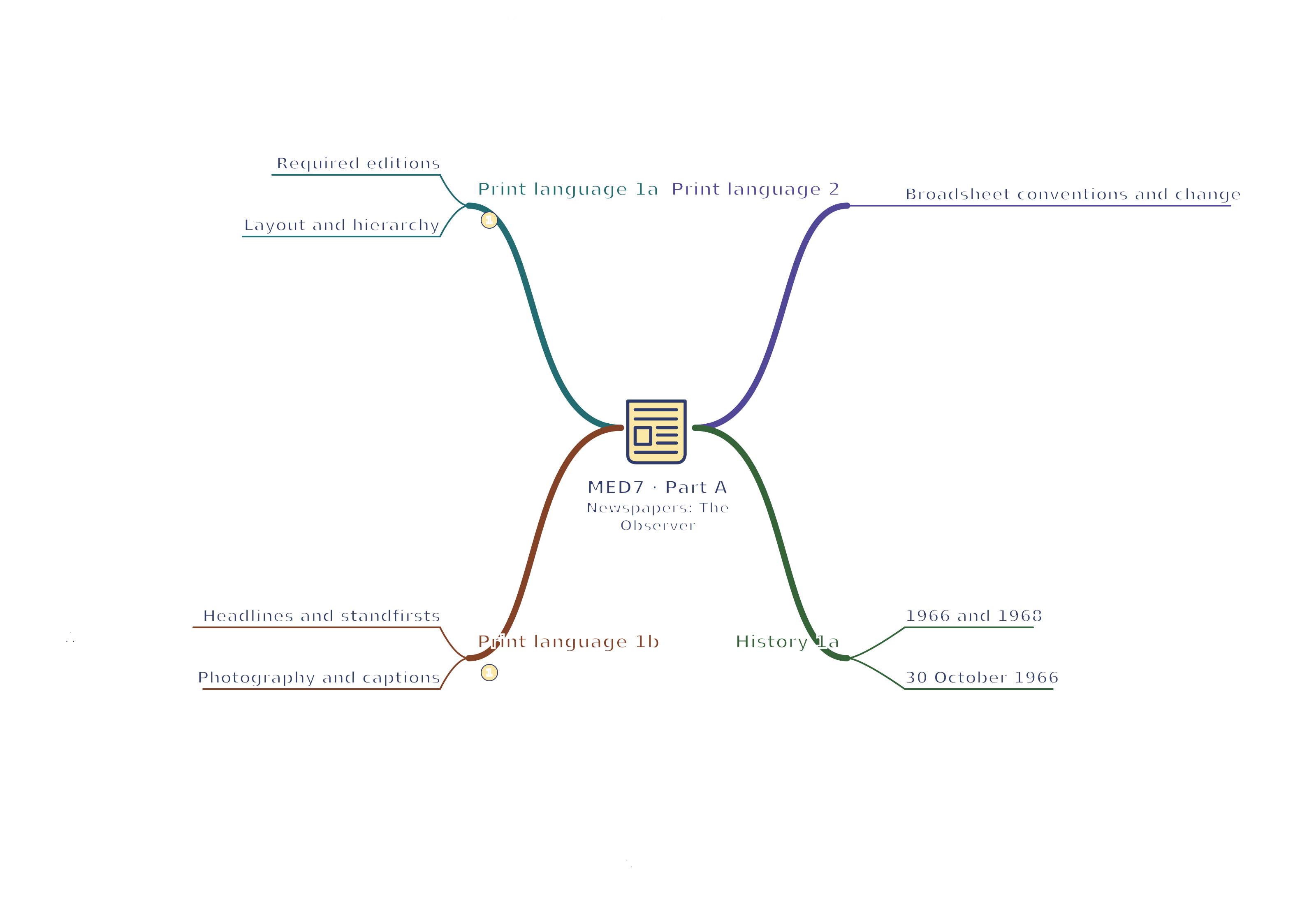
MED7 · Print language 1a / Print language 1b / Print language 2 / History 1a
View MED7 · Print language 1a / Print language 1b / Print language 2 / History 1a mind mapOpen the full-size map to zoom. Download the PDF to print on A4 or enlarge to A3.
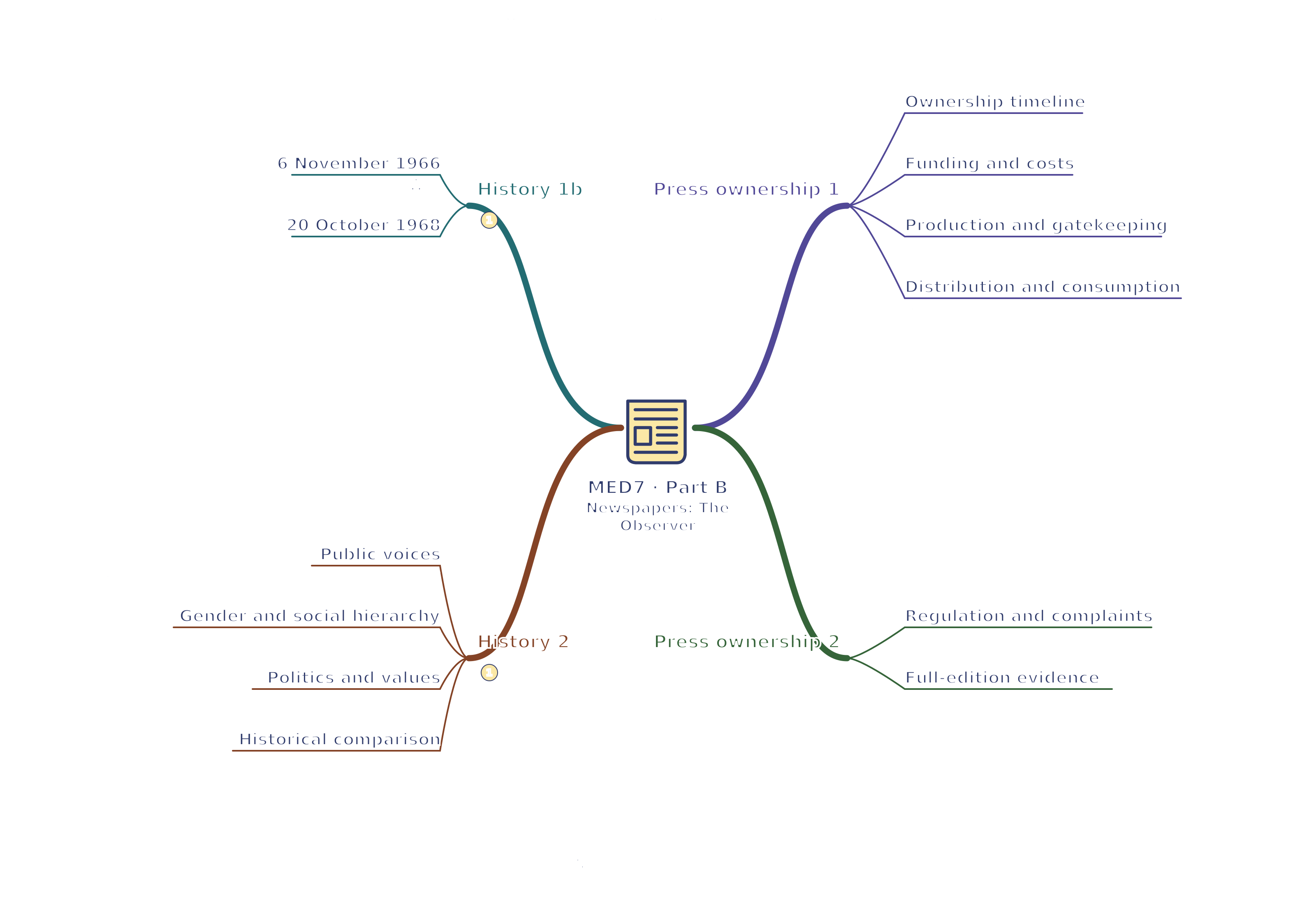
MED7 · History 1b / History 2 / Press ownership 1 / Press ownership 2
View MED7 · History 1b / History 2 / Press ownership 1 / Press ownership 2 mind mapOpen the full-size map to zoom. Download the PDF to print on A4 or enlarge to A3.
Required editions: Study three historical covers, two contemporary covers and a full edition
Layout and hierarchy: Position and size make a news agenda visible
Print language 1b
Headlines and standfirsts: Written choices frame the significance of events
Photography and captions: Selection and anchorage shape a visual account
Print language 2
Broadsheet conventions and change: Serious-news branding can persist through redesign
History 1a
1966 and 1968: Locate events and social change through the set covers
30 October 1966: Royal sympathy and espionage occupy the same news agenda
History 1b
6 November 1966: Divorce reform, European news and Cold War reporting reveal contexts
20 October 1968: Labour conflict, unequal pay and celebrity sit alongside reader offers
History 2
Public voices: Source selection can privilege some groups
Gender and social hierarchy: Representation can reveal both change and continuity
Politics and values: Editorial priorities can suggest a position
Historical comparison: Explain a change in language through a relevant context
Press ownership 1
Ownership timeline: Historical, pre-sale and post-sale ownership must be distinguished
Funding and costs: Print sales and advertising support costly journalism
Production and gatekeeping: Editorial decisions create a limited front page
Distribution and consumption: Sunday print has different rhythms from online updates
Press ownership 2
Regulation and complaints: Use the publisher's actual standards route for the period
Full-edition evidence: The whole newspaper reveals more than its cover
Connections
Print language 1a → Print language 1b: News selection reflects historical and social contexts
Part connections
MED7 · Print language 1a / Print language 1b / Print language 2 / History 1a: Print language 1a → Print language 1b — News selection reflects historical and social contexts
MED7 · History 1b / History 2 / Press ownership 1 / Press ownership 2: History 1b → History 2 — News selection reflects historical and social contexts
 Mr Kidman's Classroom